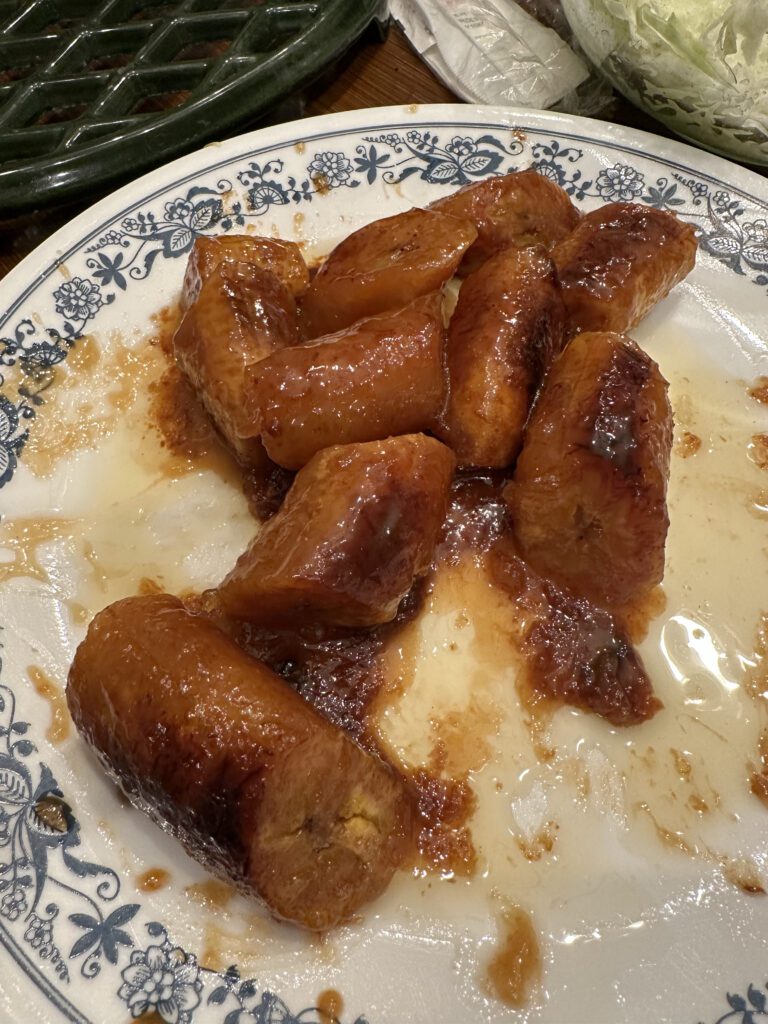
Hola mi gente!
The other night I got home late, tired, and hungry, but I still wanted real food on the table. I had already meal-prepped pollo guisado earlier in the week, so I pulled out my caldero, added a little oil, and got dinner going while I unpacked the day.
As the chicken simmered, I noticed a few very ripe plantains on the counter, the kind most people think are “too far gone.” That’s when plátano maduro pasado por azúcar happened.
Sweet Addition to the Table
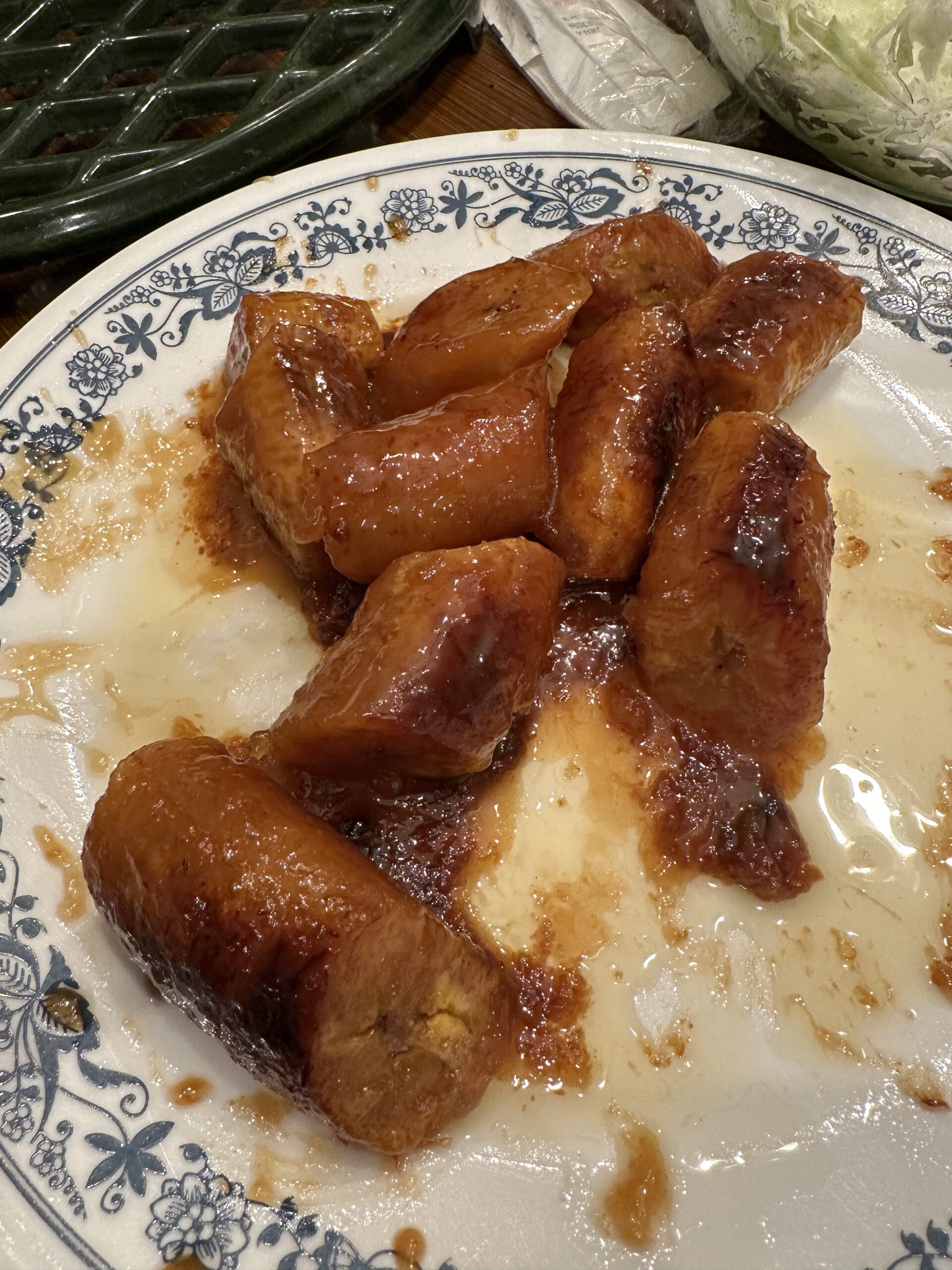
While the pollo guisado simmered away, I decided to add a touch of sweetness to balance the meal. Ripe plantains, often overlooked when their skins turn dark, are actually perfect for a quick side dish. With just a little sugar, cinnamon, cloves, and butter, they transform into soft, caramelized plátanos that pair beautifully with the savory chicken and rice.
I actually prefer maduros made this way over frying. They’re softer, less greasy, and the syrup becomes part of the dish instead of something you wipe off with a napkin.
Plátano Maduro al caldero (Sweet Plantains Dominican Style) Platanos pasado por azucar
Ingredients
- 2–3 very ripe plantains (black skin with yellow patches is perfect)
- 1 ½ cups water
- 2–3 tablespoons brown sugar (or to taste)
- 1 small stick of cinnamon (or ½ teaspoon ground cinnamon)
- 2–3 whole cloves (or a pinch of ground cloves)
- 1 tablespoon butter
- Pinch of salt
Instructions
- Peel and slice the plantains into thick diagonal pieces.
- In a medium saucepan, add water, sugar, cinnamon, and cloves. Bring to a gentle simmer until the sugar dissolves.
- Add the plantain slices and let them cook uncovered on medium heat for 8–10 minutes, turning them halfway through.
- Once the liquid starts to thicken slightly and the plantains soften, add butter and a pinch of salt.
- Stir gently to coat the plantains, then simmer another 2–3 minutes until glossy and tender.
- Serve warm, with a little bit of the syrup spooned over the top
A Bit of History
In Dominican kitchens, plátano maduro never went to waste. In my house, the darker the peel, the more valuable it became. Those plantains were set aside specifically for dishes like plátano al caldero or pasado por azúcar, usually cooked low and slow while something savory bubbled nearby. Nothing goes to waste in Dominican households; overripe plantains that others might throw away often become Plátano al caldero or platanos pasado por azucar.
How to Serve & Use
Most often, I serve these alongside pollo guisado and white rice, letting a little of the syrup run into the rice. If there’s any left, I reheat them the next morning and eat them with a slice of queso blanco and coffee.
How will you be having them?